
Connecting media art collections
Challenge
Data and objects related to media art – including video art, installations, performances, net art, and digital works – are widely dispersed and fragmented. Such artworks and collections are rarely included in the artistic canon of large national museums due to their experimental character and associated challenges for long-term digital preservation. Traditional CH ontologies and vocabularies were designed to describe physical artworks and artefacts, and have limited applicability to software- or time-based works. Consequently, collections are not interoperable, and artists and artworks are inadequately represented in standardised data sources, or public platforms like Wikidata. Copyrights pose further challenges.
Approach
The case study coordinator, TIB, will work with a diverse group of media art organisations to integrate and enrich a selection of data from their collections. The case will involve collaborative ontology mapping and harmonisation across heterogeneous datasets describing complex digital artworks and formats, including legacy software, moving images, 3D objects and VR applications, among others. Import/export routines as well as workflows for entity recognition and linking, description generation and image annotation will be tested across different types of media. Crucially, the steps of the data processing in ECHOLOT, as well as any previous actions performed by the organisations prior to import (such as preservation and maintenance activities) will test the capacity to record digital provenance data in ECHOLOT, and ideally support future reproducibility and dissemination (where usage rights apply).
Expected results
- Deliver ontology and vocabulary mappings relevant to the specialised field of media art.
- Data about artists, artworks and exhibitions from the six participating organisations will be harmonised, enriched and annotated.
- Generate new, unique identifiers for artists and artworks that have previously remained outside the art history canon, thereby contributing to their further dissemination.
Case study participants:
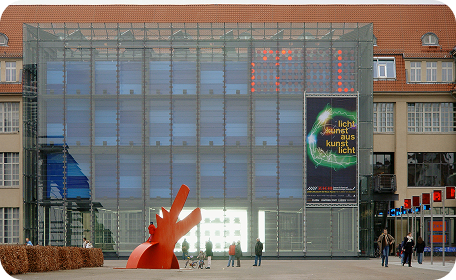
ZKM I Center for Art and Media
ZKM I Center for Art and Media (DE), internationally recognized as a leading institution for new media art: The ZKM’s video collection, comprising 1,500 titles, and the ZKM archive with 18,000 digitized items to date, represent some of the largest and most significant collections of media art in the field.
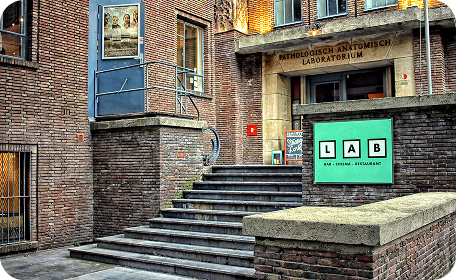
Foundation LI-MA
LI-MA (NL), a knowledge centre in the field of media art: Committed to a sustainable future for media art, taking care of over 20.000 artworks and more than 50 media art collections and archives.
Grey Area
Grey Area (CR), a space for contemporary and media art operating from Korcula island, with a special focus on arts in the Mediterranean region: It hosts the database of the Cinematography on the Adriatic Islands as well as an extensive archive of artistic programs (>100) and exhibited artworks (>200).
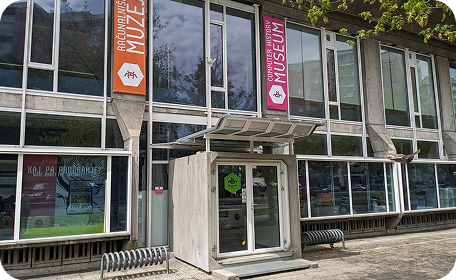
Computer History Museum
Computer History Museum (SI), a micro-NGO dedicated to preserving the history of computing and digital heritage with special focus on early Yugoslav and Slovene computer systems: Oversees a collection of 7000+ hardware and software items, described within a custom-built collection data management system.
Rhizome
Rhizome (US/DE), a leading international born-digital art organisation championing media art and co-founder of the Wikibase Stakeholder Group: Hosts the ArtBase database of media art (>2000 works) within the first Wikibase instance to be deployed independently from Wikidata.
Zentrum für Netzkunst e.V. (ZfN)
ZfN (DE), a Berlin-based, artist-led initiative that reconstructs, maintains and preserves net art and net culture. ZfN develops the Netart Repository, a growing Wikibase that stores detailed information on selected net art works.